
How ad holdcos consolidation pulling advertising away from creativity and towards media math
As mega-mergers like Omnicom–IPG accelerate consolidation around data and performance, industry leaders warn that advertising is drifting into an efficient but soulless business, one that optimises dashboards, not culture, belief or long-term brand equity.


ADVERTISEMENT
When Omnicom moved to acquire Interpublic Group (IPG), the deal was positioned as a strategic masterstroke, an aggressive bet on scale, integrated media buying, data intelligence and performance-led growth.
But behind the balance-sheet logic and investor narratives, the consolidation has triggered a far deeper unease across the advertising industry: has the business overcorrected in favour of media efficiency and short-term metrics, quietly sidelining creativity—the very force that once built enduring brands?
For many industry veterans, the answer is an unequivocal yes.
Financial performance now trumps all else
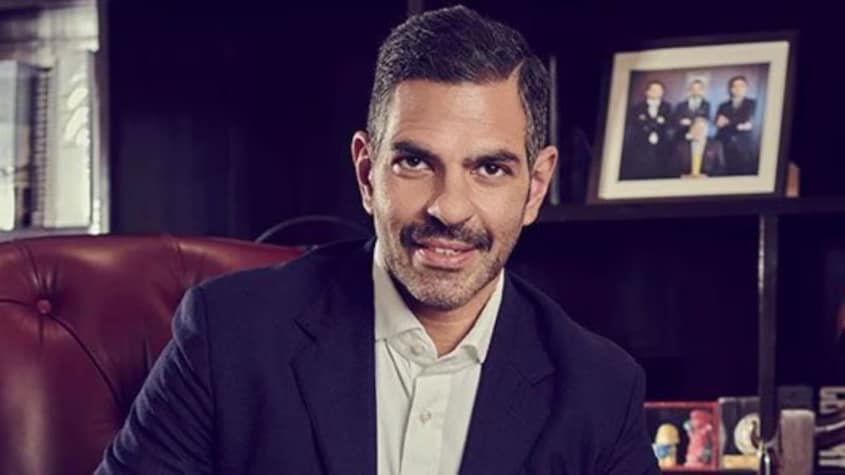
Naresh Gupta, co-founder of Bang In The Middle, believes the shift has been years in the making.
“The industry may have grown on the back of creative reputations, but today the reality is networks, not creative names,” he says.
According to Gupta, the rise of platforms like Meta and Google has fundamentally altered holding-company priorities. Financial performance now trumps all else. “Networks look at media businesses with far greater focus than creative businesses. And since pure creative services don’t carry strong margins, creative inevitably loses out.”
This logic, Gupta argues, has hollowed out the creative core of agencies long before the current consolidation wave made it visible. While digital advertising promises immediate impact on the bottom line, its ability to build long-term brand traction remains unproven.
“Creative will make a comeback,” he predicts, “but in some other form.”
For now, the pendulum remains firmly tilted towards efficiency.
That efficiency, however, is increasingly being described as sterile.
Independent creative consultant Soumitra Karnik offers one of the sharpest critiques of the current system, likening today’s advertising ecosystem to an IVR call.
“It’s efficient, targeted and says the right things,” he says. “But does anyone actually like interacting with an IVR?” In Karnik’s view, consolidation deals like Omnicom–IPG reflect an industry congratulating itself for precision while producing work that leaves no emotional residue.
“Great advertising was never an IVR message. It was a conversation people wanted to stay in.”
Instead, advertising today is optimised to reach people perfectly, while giving them “absolutely nothing to feel, remember or talk about.” The result, Karnik warns, is automated noise delivered at scale, not brand-building.
As holding companies double down on integrated media-performance stacks, creative agencies are not just being marginalised, they are being actively stripped down.
Karnik calls it a “creative cleansing”, driven by the pursuit of scale, automation and cost efficiency. “If you shortchange creativity, stop calling this a creative business,” he argues. “Call it what it has become, a performance and distribution business that occasionally produces content.”
Rise of the Attention Economy: Why marketers are rethinking metrics, media and creativity
His analogy is stark: running a perfectly calibrated ventilator on a paralysed body. Every metric looks healthy, every dashboard glows green, but nothing moves. “That’s the performance-driven advertising industry today,” he says.
This system, many argue, has fundamentally altered client expectations.
With CMOs facing shorter tenures and mounting pressure to show immediate results, long-term brand-building has become a luxury few feel they can afford. Gupta calls it a myth that everything meaningful can, or should, be measured in neat numerical terms. “The impact of creative on brand building is much deeper than transient metrics,” he says.
“But no one wants to prioritise long-term impact right now.”
Karnik takes the argument further. Attribution models and ROAS, he says, reward low-risk, familiar behaviour—formats that are repeatable, recognisable and safe. “Advertising has stopped speaking to people and started performing for dashboards,” he notes.
“Dashboards don’t build belief. Belief shows up on dashboards later.”
Abhik Santara, CEO and director of ^atom network, sees the consequences of this thinking becoming increasingly visible.
Brands that once chased reach and frequency media buying and vanity metrics are now grappling with rising customer acquisition costs and diminishing returns. “After the initial wave of enthusiasm, brands are rediscovering the irreplaceable power of strategic creativity,” he says.
Even investors, Santara notes, are beginning to ask harder questions about how companies are building sustainable brand equity, not just short-term growth spikes.
Santara also links the creative slowdown to the post-COVID mindset that still dominates many organisations, a fixation on immediacy, risk aversion and quick wins.
Holding-company agencies, weighed down by internal restructuring and relevance battles, are no longer positioned to set bold creative standards for the industry.
Yet Santara cautions against swinging to the opposite extreme.
Impact must be measurable, he says—but not narrowly defined. With regulatory shifts such as India’s DPDP framework set to reshape data usage and targeting, the rules of engagement will change again. Brands and agencies that rely solely on short-term metrics may soon find their playbooks obsolete.
The larger danger, industry leaders warn, is cultural erasure. When platforms define the box—formats, durations, placements and KPIs—ideas are reduced to filling slots. Repetition replaces originality, and brands begin to look, sound and disappear alike.
In chasing efficiency, advertising risks forgetting its original purpose: to move people, not just numbers.
When AI Becomes the Ad: How McDonald’s Christmas ad exposed advertising’s creative confidence crisis
As consolidation accelerates and dashboards grow more sophisticated, the industry faces a stark choice. It can continue optimising for what is easy to count, or rediscover the harder, messier work of building meaning, memory and belief.
Because no serious brand, as Karnik puts it, was ever built by mistaking what can be counted for what actually counts.