Elon Musk says U.S. prosperity tied to Indian immigration on Nikhil Kamath's podcast
On entrepreneurship, Musk said he admired anyone who sought to build and contribute more to society than they took from it.


ADVERTISEMENT
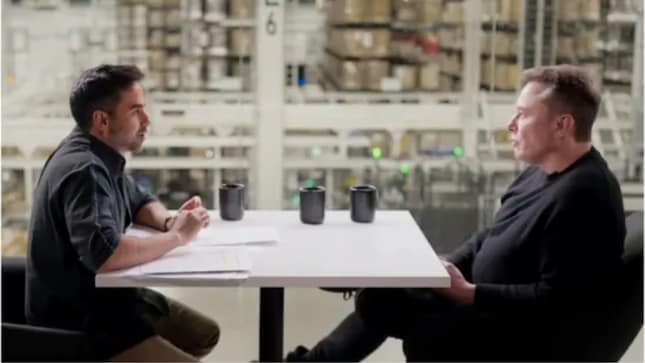
Widespread attention has followed the release of Tesla chief executive Elon Musk’s long-awaited conversation with Indian entrepreneur Nikhil Kamath on the latter’s podcast ‘People by WTF’, with the billionaire ranging across subjects from immigration policy and artificial intelligence to entrepreneurship and India’s growing role in global innovation. The interview, posted on Sunday and subsequently reshared by Musk on X, included several pointed references to India and its talent pipeline as the world’s richest man set out his view of the country’s relevance to the future of technology and the global economy.
Musk said the United States had been an enormous beneficiary of Indian talent arriving through programmes such as the H-1B visa, adding that while there had been limited misuse of the system, he did not support shutting it down. He stated that America had gained immensely from highly skilled Indians and argued that immigration, properly structured, remained a net positive for the country’s technological and economic progress.
Interview with Nikhil https://t.co/4mmIo9rcKw
— Elon Musk (@elonmusk) November 30, 2025
Reflecting on the impact of artificial intelligence and robotics, Musk predicted that within two decades work would become largely optional, comparing future employment to a hobby. He illustrated the shift by noting that growing vegetables at home or buying them from a shop were simply choices shaped by convenience, a dynamic he believes will extend to most forms of labour as automation accelerates.
Discussing Starlink, the satellite-based internet service operated by SpaceX, Musk said he hoped India would soon join the platform’s 150-country footprint, noting that he would “love” to be operating in the market. His remarks come as industry observers continue to watch for regulatory progress on Starlink’s entry into India.
On entrepreneurship, Musk said he admired anyone who sought to build and contribute more to society than they took from it, urging young founders in India to position themselves as net contributors and to prioritise creating value.
He also referenced his personal ties to India, sharing that his partner Shivon Zilis has Indian heritage and that one of their children carries the middle name Sekhar in honour of Nobel laureate S Chandrasekhar, the Indian-American astrophysicist.