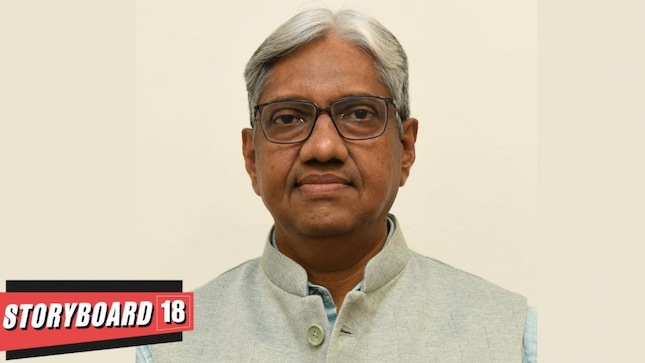

AI threatens India's small M&E market share; I&B Secretary Sanjay Jaju urges tech-craft immersion
At the 12th CII Big Picture Summit 2025, Sanjay Jaju stressed that while the country is set to become the world’s third largest economy, it holds only 2 percent of the global M&E market.

ADVERTISEMENT
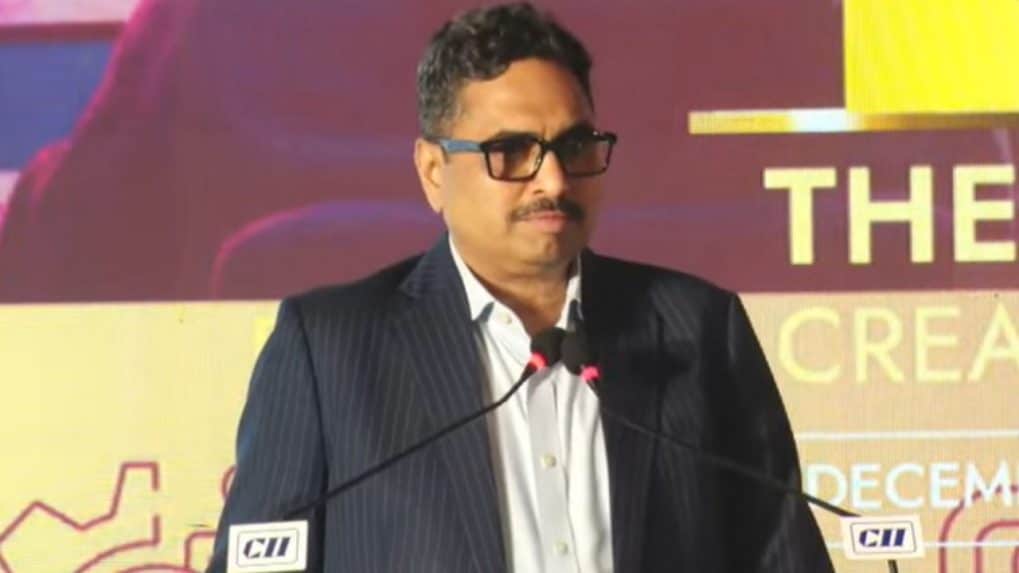
Speaking at the 12th CII Big Picture Summit 2025, Sanjay Jaju, Secretary at the Ministry of Information and Broadcasting, framed India’s media and entertainment (M&E) sector as a “pivotal moment” in the country’s economic and cultural trajectory, calling it both a soft power engine and a rapidly expanding livelihood ecosystem.
He positioned the Summit as part of a continuous national effort that began with the World Audiovisual and Entertainment Summit conceptualised by the Prime Minister. According to the Ministry, the government sees these platforms not as isolated events but as part of an ongoing push to elevate India’s creative economy.
A 1 crore-strong creative workforce
Jaju highlighted the sheer scale of India’s entertainment ecosystem, noting that close to 10 million people depend on the combined value chain of YouTube creators, digital-first talent, film workers, broadcasters, OTT staff, post-production units and supporting technology roles.
He pointed out that this is not merely an industry measured by GDP contribution but a sector that “drives human happiness and social harmony,” adding that entertainment remains one of the fundamental constants across civilizations alongside food, shelter and clothing.
India has told only 25 of its 10,000 stories
Underscoring the Prime Minister’s focus on India’s storytelling heritage, Jaju stated that while the country is set to become the world’s third largest economy, it holds only 2 percent of the global M&E market. Despite having thousands of untapped stories rooted in oral, written and visual traditions, “we have showcased only a fraction to the world.”
Jaju described three deep cultural lineages that define India’s creative identity:
- Shruti (oral traditions): from the primordial sound of Om to folk music, classical music, radio, podcasts and audio streaming.
- Kriti (written traditions): from ancient scripts to Vedas, Upanishads, epics and now the world of the internet.
- Drishti (visual traditions): from the Indus Valley dancing girl to dance, theatre, Ramlila, Sufi forms, cinema, reels and shorts.
He argued that the future of India’s soft power lies in modernising these pillars and exporting them globally.
AI disruption has already arrived
A major portion of the address focused on artificial intelligence and its impact on creativity. Jaju warned that songs and videos are already being generated “on the fly” through AI tools, and the pace of disruption is accelerating faster than India’s current market share can withstand.
Jaju cautioned that unless India embraces advanced creative technologies, its already small share of the global content market could shrink further. The future of creative work, he added, lies in “technology immersing with craft,” not in storytelling alone.
Government charts new pathway with the Indian Institute of Creative Technologies
Addressing industry concerns over skill gaps, Jaju pointed to the newly approved Indian Institute of Creative Technologies, an initiative of the Union Cabinet.
- The IICT represents a rare governance model in India:
- The industry, through CII, holds 52 percent ownership
- The Ministry holds 32 percent
- The Maharashtra government holds 15 percent
Describing it as a “passion project led by the industry,” the Ministry noted that within just three to four months, the NFDC campus has already built Mumbai’s leading virtual and immersive production studio. IICT is currently training students, master trainers and incubating creative-tech startups to prepare the workforce for next-gen production environments.
Gaming clarity opens a new frontier
With regulatory clarity emerging around gaming categories, the Ministry expects new growth in social and video games built on Indian narratives. Jaju noted that gaming represents one of the biggest opportunities for exporting India’s stories to the world.
Role of the government: create the environment, not run the business
Jaju emphasised that “the business of business is to do business,” and the government’s job is limited to:
- Building an enabling environment
- Ensuring a level playing field
- Resolving market failures
- Addressing skill and infrastructure gaps
- Offering fiscal incentives when required
He stressed that industry and government must work together to convert “craft into commerce” and “passion into paisa” to unlock investments and global competitiveness.
“This is the dawn of India’s orange economy”
Closing the address, the Ministry echoed the Prime Minister’s view that India is entering the age of the orange economy, powered by creative ideas, imagination, and cultural strength.
“This is the moment to convert our cultural wealth into creative energy that inspires the world,” Jaju said, calling on the industry to collectively position India as a global content and storytelling force.