
“No More Silos”: Sanjay Jaju calls for unified approach to Media & Entertainment Policy as India chases global scale
MIB Secretary says harmonised rules and convergence across M&E verticals are essential for India to double its global share; stresses skill development, digital disruption readiness and infrastructure push as AI reshapes creative work.

ADVERTISEMENT
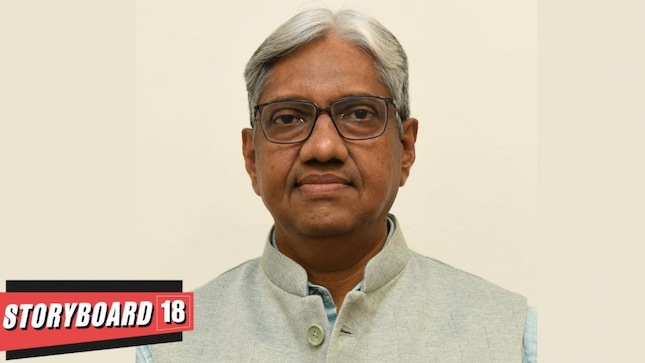
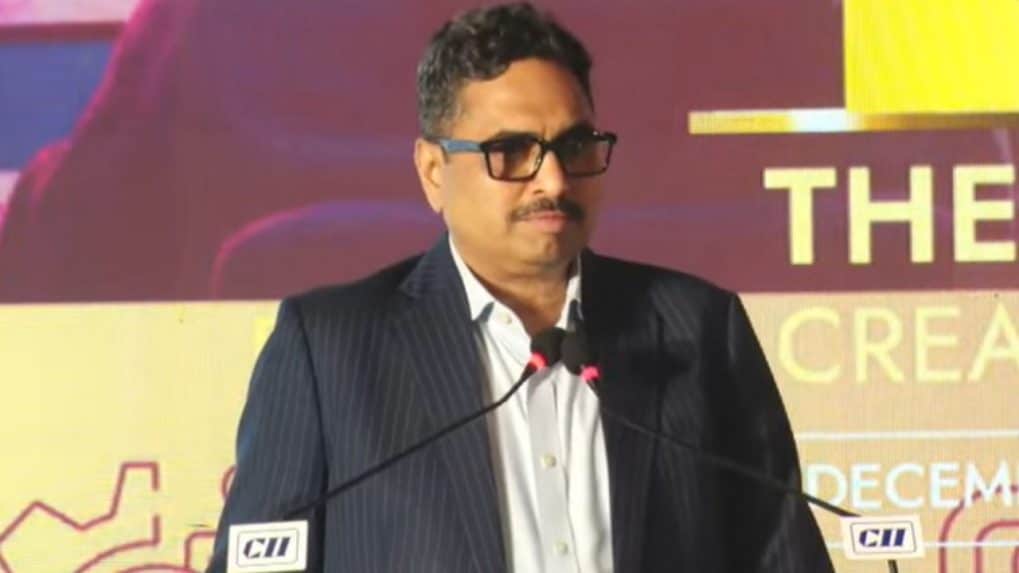
Sanjay Jaju, Secretary at the Ministry of Information & Broadcasting has called for a unified and harmonised framework for India’s Media & Entertainment (M&E) sector, stating that convergence, not fragmentation, will determine the industry’s ability to scale globally.
At the 12th CII Big Picture Summit 2025 on December 1, he underscored that India must move beyond segmented policy thinking to a shared national approach that aligns all verticals of the creative economy.
The remarks came during a press interaction where Jaju addressed the concerns raised by industry representatives around regulation, AI disruption, talent upskilling and infrastructure acceleration.
While responding to a question on a unified media policy, he clarified that while he is not aware of a national unified policy specifically being drafted for M&E, the government is working toward a unified approach designed to bring together diverse stakeholders, platforms and verticals under a cohesive development agenda.
“In fact, WAVES by MIB, while people look at it as an event, it was not an event, it was a movement,” Jaju said. “We had all shades of media built into one platform. People who belong to different segments but never had the opportunity to interact were brought together. We have to look at all the shades of media and entertainment in their entirety.”
He added that sector growth cannot be achieved at the cost of internal inequalities, “There will be losses to one segment, but gains to another. How do we harmonize and create a level playing field so that we create sustainable development for each vertical?”
Meanwhile, CII makes strong push for unified M&E policy
The remarks came as the Confederation of Indian Industry (CII) called for the adoption of a National Media & Entertainment Policy to drive long-term growth and overhaul India’s M&E landscape, at the event.
“India is poised to redefine the global creative economy. With decisive reforms- regulatory unification, infrastructure modernization, skills expansion, IP protection, and export acceleration- India can become a global creative powerhouse by 2030,” CII said, urging the Government of India and State Governments to jointly adopt a unified Media & Entertainment Policy built on convergence, digital-first innovation, and global competitiveness.
AI Disruption Will Reshape Creativity
Speaking on the impact of AI, Jaju positioned it as one of the most profound transformations facing the sector.
He cited examples including recreating classic cinema and the recent AI-powered re-release of Shiva (1998) with modern sound technology, “The impact of AI is going to be huge. There are a lot of positives. Obviously there will be negatives, so there have to be guardrails. This segment is going to be heavily disrupted. It’s important that our industry embraces it.”
AI threatens India's small M&E market share; I&B Secretary Sanjay Jaju urges tech-craft immersion
AI, he said, will unlock massive productivity gains and employment shifts, “If a work can be completed in one-tenth the time at one-hundredth the cost, obviously that has productivity gains.”
D2M Trials in Progress
On Direct-to-Mobile (D2M) broadcasting, Jaju said proof-of-concept studies are underway, led by IIT Kanpur. “Each segment impinges upon the other segments, so stakeholder consultation is essential. Deliberations are currently on.”
Storyboard18 earlier reported that India’s ambitious D2M broadcasting initiative is set to move into rollout phase by mid-2026, with commercial launches expected toward the end of next year. D2M’s ability to transmit high-quality content directly to mobile phones could ease bandwidth pressure on telecom networks and provide new monetization avenues for broadcasters.
MIB has appointed Ernst & Young (EY) as the project management consultant to design the national D2M roadmap, including a sustainable revenue and business model. The initiative, led by Prasar Bharati, aims to enable multimedia content — including videos, news, and emergency alerts — to be broadcast directly to mobile devices without relying on internet connectivity, functioning much like FM radio for the digital age.
Govt to rollout D2M broadcasting by mid 2026, commercial services later
“Subject to regulatory clearances, we expect rollout by mid-year. By late next year, we should see a commercial launch of D2M services,” said Parag Naik, EVP of Tejas Networks (Tata Group of company) which has been at the forefront of developing and testing D2M technology in India.
The technology is expected to play a transformative role in bridging India’s digital divide, particularly in rural and remote areas with limited or no internet access.
Upskilling & Infrastructure: IICT as a Creative-Tech Hub
Responding to concerns about skill gaps and job transitions due to technology, Jaju confirmed a long-term human capital strategy.
He said the creation of the Indian Institute of Creative Technologies (IICT) marks a turning point, “Just like IITs have done for technology and IIMs for management, hopefully IICT does the same for the creative economy.”
The IICT, built on a hub-and-spoke model, will share infrastructure and resources across institutions like FTII and IIMC to build a future-ready workforce.
WAVES to Become a Biennial National Marketplace
He confirmed that the WAVES Summit will now be held biennially, evolving into an integrated marketplace. “Not just for films, but for startups seeking investment, gaming companies looking at distribution platforms.”
Clarifying the government’s position on OTT regulation and user-generated content, he noted, “The intermediary guidelines are in public domain, and that’s where we are right now,” reiterating the need for industry responsibility.
I&B Ministry issues draft accessibility guidelines for OTT platforms for persons with disabilities
Earlier today at CII event, Jaju described India’s creative economy as a national priority and a cultural force, calling this “the dawn of India’s orange economy.” He highlighted India’s vast storytelling heritage, the potential of gaming and AVGC, and the need to convert cultural assets into global competitiveness.
As India targets increasing its global M&E market share from 2% to 4–5%, the industry is now looking toward the government for structural alignment.