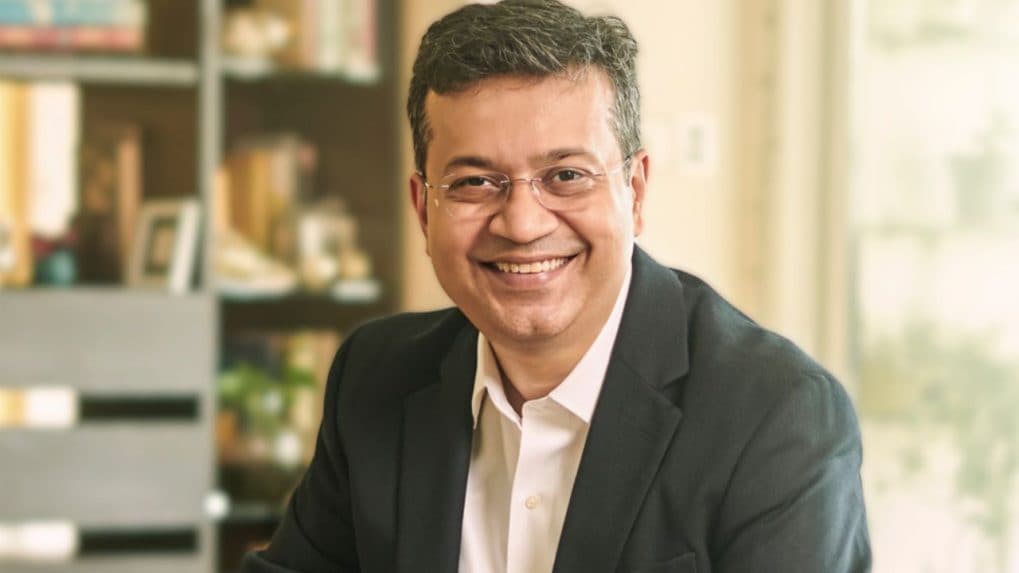
CII Big Picture Summit 2025: 'We now need to build IPL of creativity,' says Sony Pictures' Gaurav Banerjee
Speaking at the CII Big Picture Summit 2025, Gaurav Banerjee said India stands on the cusp of exponential expansion, and added," A $100 billion Indian M&E industry is within reach"

ADVERTISEMENT
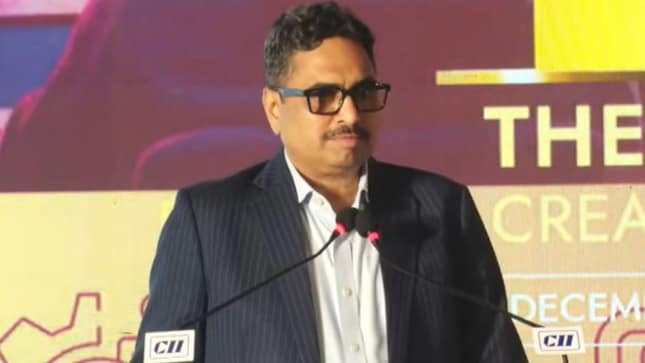
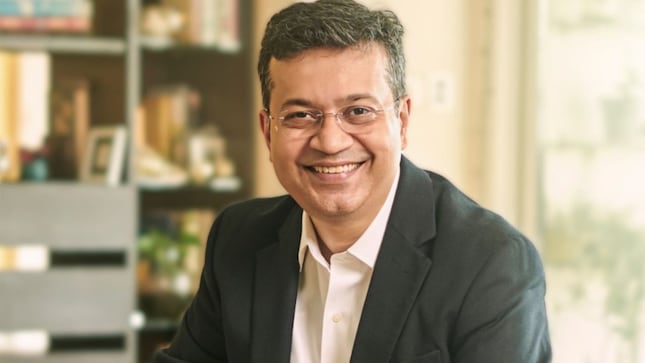
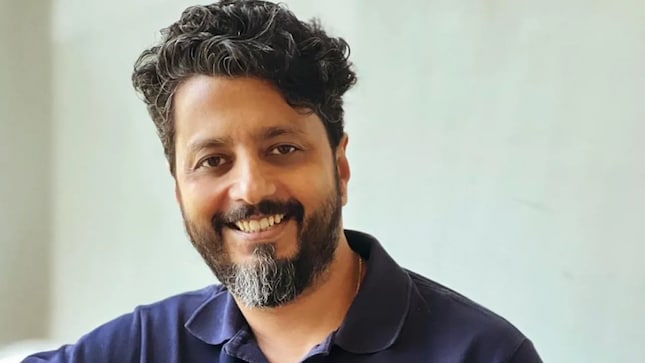
Sony Pictures Networks India MD & CEO Gaurav Banerjee called on the Indian media and entertainment industry to radically scale its global ambition and creative capacity, declaring that India must “build the IPL of creativity” to compete with the world’s leading cultural powerhouses.
Speaking at the CII Big Picture Summit 2025, Banerjee said India stands on the cusp of exponential expansion. “A phenomenal headroom to grow dramatically. A $100 billion Indian M&E industry is within reach,” he said. Yet, he noted that the industry’s potential has long been constrained by the comfort of a vast domestic market. “While Indian music tops charts in North America and films create echo far beyond our borders, our ambition has been shaped as well as limited by the comfort of a large domestic market.”
Drawing parallels with South Korea’s rise as a global cultural force, Banerjee urged India to adopt a similar boldness. “The real constraint on our growth is not the market, it is the ambition we place on ourselves,” he said.
Banerjee pointed to the Indian Premier League (IPL) as a model of how scale, structure and talent development can transform a sector overnight. Referencing Silicon Valley’s ecosystem-building approach, he said India must create a similarly powerful system for creatives. “We now need to build the IPL of creativity,” he emphasized, calling for a national framework that discovers, trains and showcases talent across every layer of the sector.
He noted that global creative economies are powered by deep investments in specialised arts education. The United States has dozens of globally recognised film, design and media schools, while China has expanded animation, gaming and digital arts programmes across more than 3,000 higher-education institutions. India, he said, has made progress with more programmes today than a decade ago—but not at the pace needed. As ambitions rise, “our capacity must grow even faster.”
Banerjee proposed establishing Centres of Excellence dedicated to writing, animation, gaming, VFX, design, post-production and creative entrepreneurship across all Indian languages. He also stressed the need for stronger industry–academia partnerships to ensure training is “practical, contemporary, immersive, and directly connected to real industry needs.”
He further recommended building regional creative clusters where talent, technology and businesses can collaborate in close proximity. With global demand for Indian storytelling rising, Banerjee said it is imperative to scale the number of world-class creators the country nurtures each year.
Touching on the role of artificial intelligence, he said AI will reshape workflows and enhance efficiency, scale and speed—but it cannot replace human imagination. “AI has the potential to improve how we work. But it will not define creativity. Human imagination will,” he said.
Banerjee’s call to action sets a sweeping vision for India’s next creative leap: a globally competitive industry built on ambition, talent, and world-class creative ecosystems.