Govt revises draft TRP guidelines to ensure fair competition and accurate television ratings
The new system to reflect the diverse and evolving media consumption habits of viewers

ADVERTISEMENT
The government has inched forward on a major reform of India’s television audience measurement system, with the Ministry of Information & Broadcasting placing a revised draft amendment to the Policy Guidelines for Television Rating Agencies in India, 2014 in the public domain. The update was shared in the Lok Sabha on Wednesday.
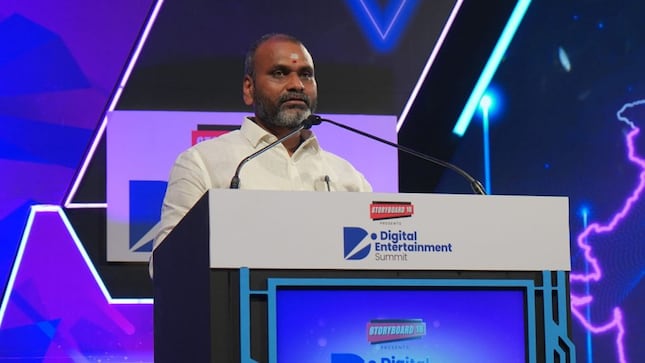
Responding to questions from MPs Dr. Kirsan Namdeo and Charanjit Singh Channi, Minister of State for Information & Broadcasting L. Murugan said the second draft—released on November 6, 2025—follows stakeholder inputs on the initial version issued on July 2. The move underscores the Centre’s push to strengthen the credibility, accuracy and fairness of the country’s television rating points (TRP) framework.
According to the Ministry, the proposed amendments aim to foster fair competition among rating agencies, improve the representativeness of viewership measurement, and bring India’s TRP ecosystem in line with shifts in audience behaviour across linear TV, digital streaming and connected devices.
The revised draft represents the most ambitious attempt in more than a decade to restore trust in the ratings system after a string of controversies—including allegations of manipulation and panel tampering—and rising concerns about the relevance of BARC-era guidelines in a digital-first environment.
Key proposed changes include:
• Ending landing-page viewership influence: Data arising from landing-page placement will no longer be counted, eliminating a widely debated practice used by channels to artificially boost ratings. • Accelerated expansion of panel homes: Rating agencies will be required to add 10,000 households annually until the panel reaches 1.2 lakh homes. They must also scale up to 80,000 homes within six months of the notification. • Platform-agnostic measurement: Ratings will extend to Connected TVs and emerging digital viewing formats, aligning the system with India’s hybrid consumption patterns. • Stricter conflict-of-interest rules: No entity will be allowed to hold 20% or more equity in both a broadcaster and a rating agency.
However, the draft includes a key exemption: the Broadcast Audience Research Council (BARC) will not be subject to the new equity cap. The carve-out has divided analysts—some believe it is needed to maintain continuity, while others argue it weakens the reform’s intent to structurally insulate the ratings ecosystem.
India’s ratings framework has long faced credibility deficits, with industry complaints about inadequate sample representation, manipulation risks and sluggish adaptation to digital viewing. The reforms seek to modernise and depoliticise the system, which underpins a TV advertising market valued at around ₹30,000 crore.
Broadcasters and media planners have largely welcomed the direction of the overhaul, but caution that the changes demand significant operational investment and re-engineering of measurement processes.
Industry executives also told Storyboard18 that the December 5 deadline for public comments on the revised draft is too tight for a revamp of this magnitude. They warned that successful implementation will require extended timelines, stronger procedural safeguards and coordination support to ensure stability during the transition.