
Inside India’s 2026 Media Pitches: How Omnicom–IPG will be tested beyond scale
As global consolidation promises sharper prices and deeper data, Indian advertisers are asking harder questions on transparency, talent and trust- especially for mid-sized brands that fear getting lost in the scale game.

ADVERTISEMENT
For Indian advertisers heading into 2026, the Omnicom–IPG merger is less a spectacle and more a stress test.
Yes, the newly merged entity brings formidable assets: global scale, integrated platforms like Omni and Acxiom, and unprecedented buying power. On paper, the logic is compelling: massive buying power, integrated data platforms, global tools and the promise of efficiency at an unprecedented scale.
On the ground, however, Indian marketers are approaching the merger with a mix of optimism and caution, because scale alone no longer wins pitches. Indian CMOs and consultants say the pitch room conversation has shifted decisively away from tools and toward trust.
Rahul Vengalil, CEO and co-founder of tgthr, sums up the efficiency argument bluntly. For large advertisers deploying ₹500–1,000 crore media budgets, even marginal gains matter. A two percent saving on a ₹1,000 crore spend translates into ₹20 crore straight back to the bottom line. In that context, consolidation is a client advantage.
Steady Agencies > Big Networks : Marketers push back as agency turmoil threatens brand continuity
With GroupM already operating at scale and Omnicom–IPG set to follow, large spenders are likely to benefit from intense competition among mega buyers driving down costs.
This dynamic aligns with broader industry data. India’s advertising market is projected to cross ₹1.15 lakh crore by 2026, growing at high single digits annually, with digital accounting for over 55 percent of spends. As volumes balloon, procurement teams are playing a more assertive role, often prioritising efficiency, trading leverage and rate transparency as core KPIs. For such advertisers, scale is not a risk- it is the product.
But the same scale that excites large advertisers is precisely what worries mid-sized and emerging brands.
The agility gap
For smaller and mid-sized clients, buying efficiency is only one part of the equation. Media today is as much about creative orchestration, rapid experimentation and digital-first thinking as it is about rates.
Vengalil argues that this is where large networks- including a merged Omnicom–IPG could find themselves at a disadvantage. These clients want agility, faster turnaround times, seamless multimedia integration and increasingly, AI-led planning that is customised rather than templated.
“In such cases, any large network risks becoming slower and less flexible,” he notes, pointing out that digital often sits at the centre of modern media strategies, with other channels built around it dynamically. Smaller agencies and independents, by contrast, can often move faster and adapt campaigns in real time.
This concern is echoed by marketers evaluating the merger through an Indian lens.
Saket Choudhary, National Marketing Manager at Hisense India, says the real questions in pitches are far more practical than the promise of global tools. Senior attention, priority within the system and transparency in media deployment, especially under principal-based buying models, are now front and centre.
“In a year where everyone is talking about efficiency, what we are really looking for is a partner that can balance innovation with governance,” Choudhary says.
For mid-tier brands, the fear is not inefficiency but becoming a footnote in a global consolidation spreadsheet.
Trust, transparency and principal-based buying
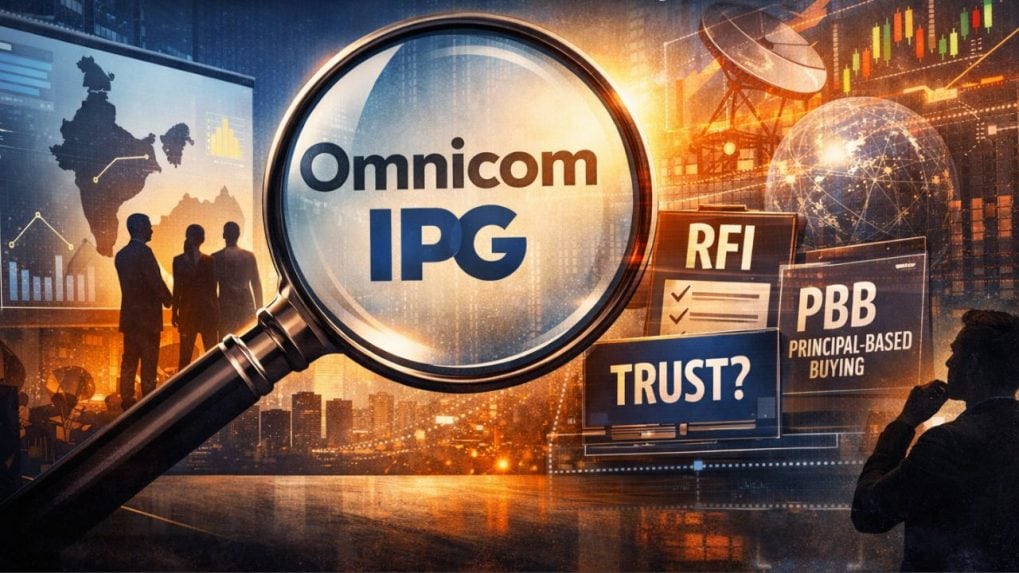
Few issues illustrate this tension better than principal-based buying (PBB). While agencies argue that PBB can unlock efficiencies and premium inventory access, Indian advertisers remain cautious.
Annkita Karrva, Associate Director, MarComm (B2B) at BenQ India, frames the debate as one of trust in a period of structural change.
Marketers today want clarity on trading philosophy, talent ring-fencing and governance mechanisms—particularly if global integration plans evolve mid-contract. In fast-moving categories like consumer electronics, stability of the core team over 18–24 months can be as valuable as sophisticated algorithms.
Consultants believe this scrutiny will intensify in 2026 as Indian marketers reopen media reviews after a year of global uncertainty.
How ad holdcos consolidation pulling advertising away from creativity and towards media math
Rajesh Aggarwal, founder and CEO of DAIKO FHO, notes that while Omnicom–IPG will naturally lead with scale and integrated platforms, Indian RFIs will probe much deeper. Decision rights, speed of execution, senior accountability and local autonomy will be decisive.
On PBB specifically, Aggarwal says Indian advertisers are more informed and pragmatic than before, but not uncritical. Transparency, audit rights and clear separation between advisory and trading roles are increasingly non-negotiable. Cost efficiency alone will not compensate for opacity.
The talent question
If efficiency and transparency are table stakes, talent continuity may be the real swing factor. Naresh Agarwal, co-founder of Bang in the Middle, believes the merged Omnicom entity faces its toughest test yet.
CMOs and procurement teams will closely evaluate whether the merger delivers anything truly new beyond scale. This scrutiny is sharpened by the ongoing Competition Commission of India (CCI) investigation into media practices, which has heightened advertiser sensitivity around ethics and integrity.
From Pink Slips to Silent Sidelining: Inside adland’s layoff and anxiety crisis
Smita Khanna, COO of Newton Consulting India, warns of a “brain drain” risk in the middle office during large mergers. Senior leadership attention often shifts to integration and synergy, leaving mid-sized Indian advertisers feeling deprioritised.
In fact, she is seeing a shift where clients are no longer just hiring an agency; they are hiring specific people. To counter this, she expects to see more Key Personnel Continuity Clauses in contracts. For many brands, the 'safe harbor' of an agile independent agency or a specialized consultancy where senior bandwidth is guaranteed, is becoming far more attractive than the perceived clout of a newly formed, and potentially chaotic, mega-entity.
A more fragmented future?
Ironically, the rise of mega-mergers could accelerate the growth of independent agencies and consultancies in India. As Agarwal points out, heightened oversight and consolidation at the top may create space for new, nimble media agencies focused on transparency and senior involvement.
For Omnicom–IPG, the challenge in India is clear. Scale will win large budgets and deliver undeniable efficiency. But winning trust—especially among mid-sized advertisers—will depend on proving that agility, accountability and human capital can coexist with global consolidation.
In a market as diverse and fast-evolving as India, scale may open the door. Whether it keeps clients inside will depend on what happens after the pitch decks close.